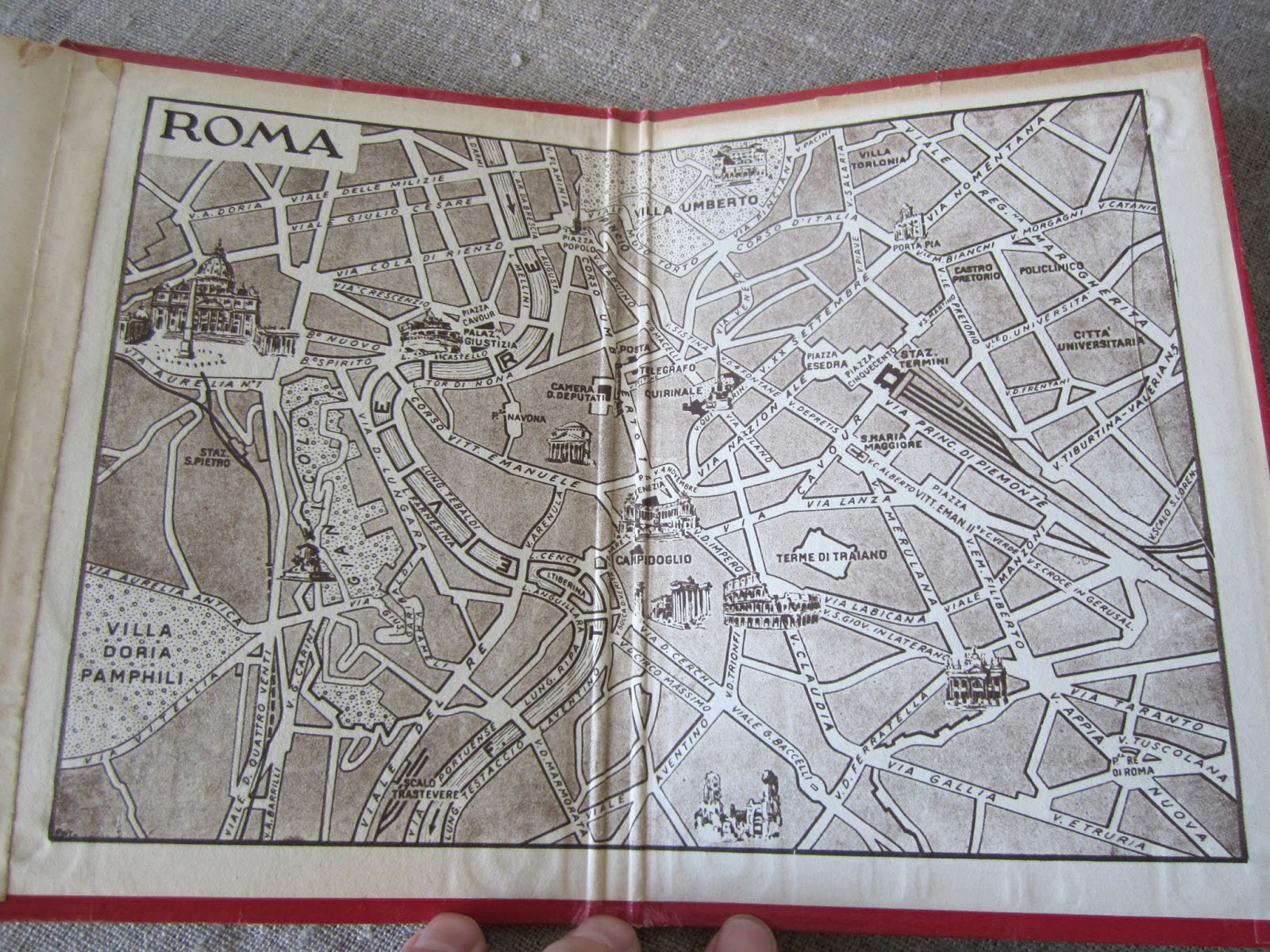
I promised to present you the Renaissance villa where I had the honor to live during our Rome expedition. So... here it comes, a story about Villa Lante!

Villa Lante was originally constructed by Baldassarre Turini (1481-1543), the datary of Pope Leo X (pontifical years 1513-1521). Turini was suffering from the heat of the town, and decided to build a villa on the lush Janiculum hill full of vineyards. The architect was Turini's close friend Giulio Romano (1499-1546), the student of Raphael (1483-1520). Painting was performed by other Italian artists belonging to the same school: Vincenzo Tamagni da San Gimignano (1492–1530), Polidoro da Caravaggio (1499–1543) and Maturino da Firenze (1490–1528). The construction work was started in the late 1510's and the villa was finished in 1531.

Later after Turini's death, his nephew rent the villa for the French cardinal, Ambassador Georges d'Armagnac (1501-1585). In 1551 the villa was bought by Lante family, who didn't sell it onward until in the beginning of 19th century. For a period of time, the villa belonged to Prince Camillo Borghese (1775-1832), the brother-in-law of Napoleon Bonaparte (1769-1821). The Borgheses reformed the interior of villa to more fashionable neoclassical look.

In year 1837 the Borgheses sold the villa to the founder of the
Society of the Sacred Heart of Jesus, Madeleine Sophie Barat (1779-1865), who was later canonized. The villa was used as the halls of residence for nun novices. Later the society started to lease the villa. German archeologist Wolfgang Helbig (1839–1915) and his wife, Russian princess and pianist Nadine Schakowskoy (1847-1922) rented the villa in 1887. During their reign, the villa became one of the best known salons in Rome. Many famous visitors such as aristocrats, musicians and scholars gathered there.

Helbigs' son, chemist and general Demetrio Helbig (1873–1954) bought the villa from the nuns in 1909. In the year 1946 he started to lease the upstairs for Göran Stenius (1909-2000), who was the chargé d'affaires of the Finnish Embassy to the Holy See.

Amos Anderson (1878-1961), who was both a wealthy Finnish businessman and a generous patron, had already founded
Institutum Romanum Finlandiae in 1938 and the institute was looking for a residence in Rome. Later in 1940's, Stenius informed that the old general was willing to sell the villa for the Finns with a very affordable price. With Anderson's funds, the state of Finland bought the villa in 1950 to be used by the institute. During the time, the villa was in very bad condition and it needed an in-depth renovation.

Let's take a look to Villa Lante's reception rooms. The plaster reliefs are neoclassical, they were created by the famous Italian sculptor Antonio Canova (1757-1822) and were mounted here in the beginning of 19th century. When the
salone was restored 1974, part of the wall was left in the neoclassical style and part of the original, marble imitating painting was dug up.

On the other wall you can see a huge painting. It's
Historia d'Italia by famous French artist Valentin de Boulogne (1591-1632). On the back you can notice a small fortepiano. It was a gift for Nadine Helbig - from no one else than the great piano virtuoso, Hungarian composer Franz Liszt (1811-1886) himself.

In the centrum of the ceiling there is the massive coat of arms of Pope Paul V (pontifical years 1605-1621), who belonged to Borghese family. The eagle and the dragon are the insignias of Borghese. Above them are the papal tiara and the crossed keys of Saint Peter, the insignias of pontificate. In the next photo you can see red framed ovals. They are the emblems of Turini and Pope Clement VII (pontifical years 1523-1534). I liked their enigmatic look a lot. Somewhere in the future I must write a post dedicated to emblems!

Do you see the empty white slots in the ceiling? There were originally frescos, which were removed and sold separately when the Borgheses sold Villa Lante in 1837. Eventually those frescos were bought to Palazzo Zuccari, which has been the home of
Bibliotheca Hertziana, Max Planck Institute for Art History since 1912.

We had the honor to visit the institute and see the frescos now mounted to a ceiling with a bit different shape as you can see in the photo above.

This fresco depicts the finding of the grave of Numa Pompilius (753–673 BC), the legendary second king of Rome. His burial place was believed to be located on the Janiculum hill. On the background, you can see Villa Lante.

In the side rooms of Villa Lante, the the ceilings are also decorated. The big coat of arms belongs to Cardinal Marcello Lante della Rovere (1561-1652), the Bishop of Todi. Three white eagles are the insignia of the Lante family. The red ecclesiastical hat,
galore, is the sign of cardinals. The symmetrical and ornate grotesque paintings depict mythical characters, flowers and animals. They were inspired by paintings found from ancient Roman houses buried in fill and became underground like caves,
grotto - hence the name grotesque, so typical for the school of Raphael.

In another room one can see how furiously the nuns tried to scrape away paintings they considered inappropriate for the halls of residence of nun novices. Some characters are long gone, only ghosts are left. Destroying probably turned out to be too time consuming, and they eventually painted over the whole frescos. In the middle you can see a portrait, which is believed to depict Raphael.

The date on the wall of loggia indicates the time when the villa was finished.

The columns in the loggia are from the classical era. It was rather common in Rome to transport useful building elements from ancient ruins. Nowadays the space is protected with windows. I have to mention the acoustics are brilliant. In our last meeting one of the participants performed us an amazing aria from Puccini - wow, that gave me goosebumps!

One the most striking aspects of Villa Lante is no doubt the location. The villa is facing towards the east and from the roof terrace it looks like the whole of Rome opens in front of you. This is the place where we enjoyed our meals and we often wondered could one get bored with such an amazing view.

The convent of nuns is still located below Villa Lante. You can see their garden in the photo. The convent building is quite hidden behind the trees. The big cross resembling building on the left is a prison.

We could also take a look to the park next to the villa. Every night courting couples gathered there to enjoy the romantic view and (assumed) privacy.

I got an attic room and this was the view from my window. Some runaway princess or black hooded courier really should have come to the gate during the midnight!

I'm afraid I'm now on the other side of the gate. Next time I wish to visit Villa Lante I probably have to ring the doorbell during the visiting hours, which are by the way from 9 am to 12 am on every business day. If you got interested, the address is Passeggiata del Gianicolo 10 - it's very easy to get there by the bus number 115. Even if you wouldn't visit the villa, I greatly recommend the view from the top of the hill!
As the main sources for this article, I used the website of Institutum Romanum Finlandiae and the profound presentation we were given by the institute's intendant. If you are interested in all those exciting moments the villa has had during its Finnish reign, I recommend the excellent Finnish book Villa Lante. Suomen Rooman instituutti 1954-2004 (2004).